
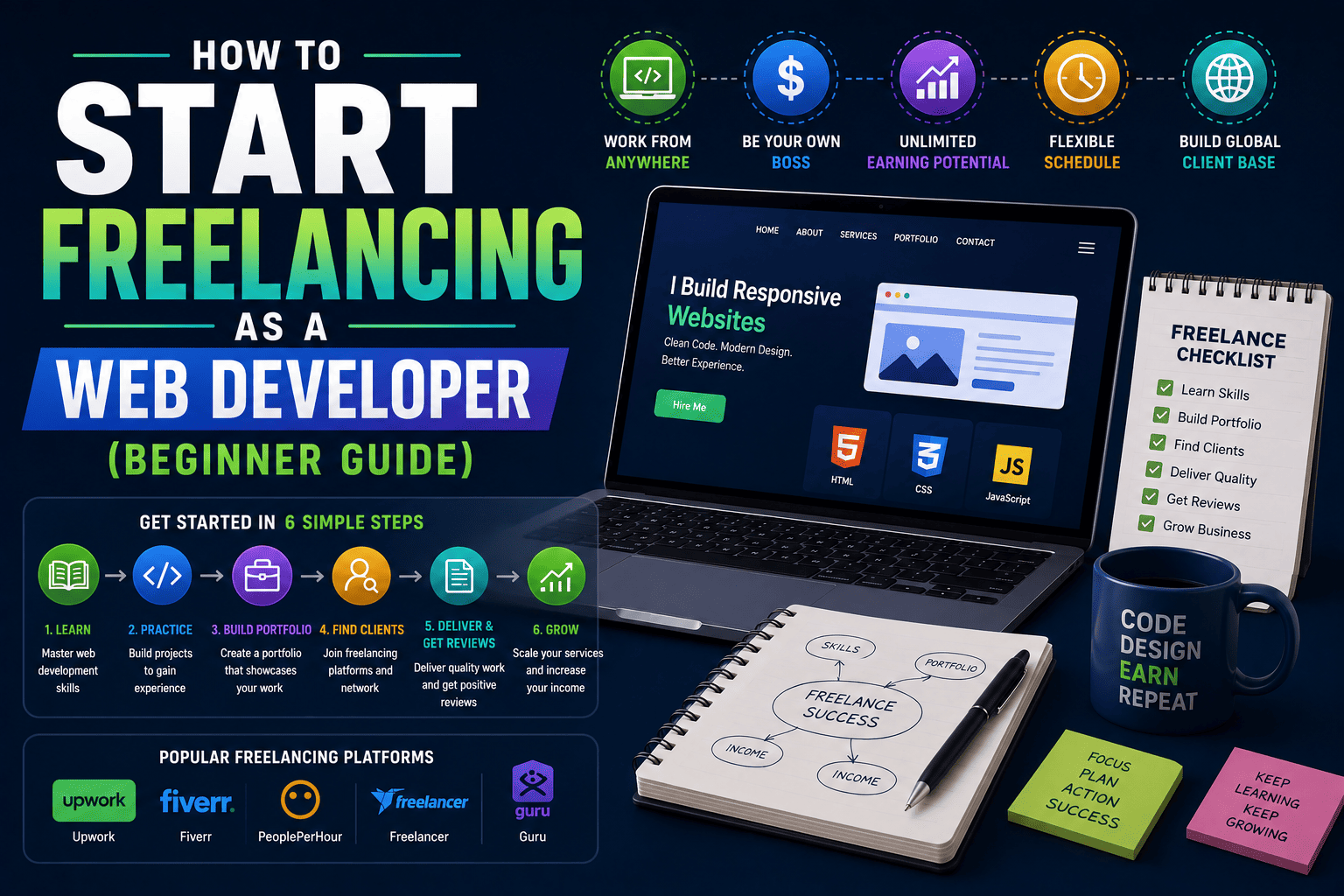
How to Start Freelancing as a Web Developer (Beginner Guide)
Want to Earn While You Learn?
Imagine this.
You’re a college student. Your friends are looking for internships, but you have already earned your first ₹5,000 by creating a website for a local business.
Sounds exciting?
The good news is that web development is one of the few skills that allows students to start earning even before graduation. Whether you’re in 11th or 12th standard, pursuing BA, BCA, B.Sc, B.Com, or B.Tech, freelancing can help you gain real-world experience and generate income.
Many successful Freelance Web Developers start their journey as students by working on small projects, building portfolios, and gradually expanding their client base.
The best part? You don’t need years of experience to get started.
In this beginner-friendly guide, you’ll learn exactly how to start freelancing as a web developer, build your first portfolio, find clients, and grow your income step by step as a Freelance Web Developer.
What Is Web Development Freelancing?
Web development freelancing means offering website-related services to clients independently instead of working as a full-time employee.
Clients hire freelancers for tasks such as:
- Creating business websites
- Building portfolio websites
- Designing blogs
- Updating existing websites
- Improving website speed
- Website maintenance
- WordPress website development
- SEO-friendly website setup
You can work remotely from home and choose projects according to your schedule.
Why Freelancing Is a Great Opportunity for Students
Many students believe they need a degree before they can start earning. In reality, businesses care more about skills and results than certificates alone.
Benefits of Freelancing as a Student:
- Earn part-time income
- Build practical experience
- Create a strong portfolio
- Improve communication skills
- Work from anywhere
- Learn business and client management
- Increase job opportunities after graduation
For example, a B.Com student who learns website development can create websites for local shops and startups while studying. This practical experience often becomes a major advantage during placements and interviews.
Step-by-Step Guide to Start Freelancing as a Web Developer
Step 1: Learn the Right Web Development Skills
Before finding clients, you need skills that businesses actually need.
Focus on learning:
- Website structure and design
- WordPress development
- Responsive website design
- Basic SEO
- Website speed optimization
- Hosting and domain setup
- Website maintenance
You don’t need to become an expert programmer immediately.
Many beginner freelancers start by building WordPress websites for small businesses.
Step 2: Build Practice Projects
Clients won’t hire you based on promises.
They want proof.
Create 3–5 sample projects such as:
- Personal portfolio website
- Restaurant website
- Coaching institute website
- Freelancer portfolio
- Local business website
These projects become your portfolio.
Think of your portfolio as your digital resume.
Even if the projects are self-created, they demonstrate your skills and creativity.
Step 3: Create Your Professional Portfolio
A portfolio website helps clients trust you.
Your portfolio should include:
About Me Section: Introduce yourself and your skills.
Projects Section: Show screenshots and explain your work.
Services Section: Mention services you offer.
Contact Information: Make it easy for clients to reach you.
Example Services
| Service | Beginner Pricing |
|---|---|
| Portfolio Website | ₹3,000-₹8,000 |
| Business Website | ₹5,000-₹20,000 |
| WordPress Setup | ₹2,000-₹5,000 |
| Website Maintenance | ₹1,000-₹5,000/month |
Pricing depends on your skills, project complexity, and client requirements.
Step 4: Choose Freelancing Platforms
Several platforms connect freelancers with clients.
Fiverr: Best for beginners because you can create service listings (called gigs).
Examples:
- I will create a WordPress website
- I will design a responsive landing page
- I will optimize your website speed
Upwork: Clients post projects and freelancers submit proposals.
Freelancer: Good for gaining initial experience and small projects.
LinkedIn: An underrated platform where many professionals find freelance clients.
Step 5: Get Your First Client
This is where most beginners struggle.
Don’t wait for clients to magically find you.
Start actively looking.
Smart Ways to Find Clients
1. Reach Out to Local Businesses: Look around your area.
Many businesses still don’t have professional websites.
Examples:
- Coaching centers
- Local shops
- Restaurants
- Doctors
- Consultants
Offer to create a simple website.
2. Use Your Network: Tell friends, relatives, teachers, and classmates about your services.
Your first client often comes from your existing network.
3. Join Online Communities: Participate in:
- Facebook groups
- LinkedIn communities
- Student entrepreneur groups
- Startup forums
Provide helpful advice and build credibility.
Step 6: Learn How to Communicate with Clients
Technical skills alone won’t guarantee success.
Communication matters equally.
When talking to clients:
Always:
- Respond professionally
- Ask clear questions
- Understand project requirements
- Set realistic deadlines
- Provide progress updates
Avoid:
- Overpromising
- Missing deadlines
- Ignoring messages
- Accepting projects beyond your ability
Professional communication builds long-term relationships.
Step 7: Deliver Outstanding Work
Your first few clients are extremely important.
Happy clients often become repeat customers.
Focus on:
- Mobile-friendly websites
- Fast loading speed
- Clean design
- Proper navigation
- SEO basics
A satisfied client may recommend you to others, creating a steady flow of projects.
Common Freelancing Mistakes Beginners Should Avoid
Mistake #1: Learning Forever Without Taking Action
Many students keep watching tutorials but never start.
The fastest learning happens through real projects.
Mistake #2: Charging Too Little
Don’t undervalue your work.
Competitive pricing is fine, but extremely low prices can attract difficult clients.
Mistake #3: Ignoring Portfolio Building
Without a portfolio, clients have no reason to trust you.
Mistake #4: Taking Every Project
Choose projects you can realistically complete.
Mistake #5: Not Learning SEO
Businesses want websites that can attract visitors through Google.
Basic SEO knowledge increases your value significantly.
Freelancing vs Part-Time Job: Which Is Better?
| Factor | Freelancing | Part-Time Job |
|---|---|---|
| Income Potential | High | Limited |
| Flexibility | Excellent | Fixed Schedule |
| Skill Growth | Very High | Moderate |
| Independence | High | Low |
| Client Interaction | Yes | Limited |
| Portfolio Building | Strong | Limited |
For students interested in digital careers, freelancing often provides faster learning and better long-term opportunities.
Why Web Development Skills Matter More Than Ever
Today, every business needs an online presence.
This means demand for website developers continues to grow.
Web development skills can help you:
- Earn freelance income
- Start a digital agency
- Secure internships
- Build startups
- Work remotely
- Create personal projects
Unlike many traditional part-time jobs, web development creates a skill asset that continues generating opportunities throughout your career.
How SiteGenius Helps You Go From Learning to Earning
Many students struggle because they learn random tutorials without a clear roadmap.
SiteGenius provides a structured learning path designed specifically for beginners.
Students learn:
- WordPress website development
- Website design using Elementor
- Responsive website creation
- SEO fundamentals
- Website optimization
- Real-world project building
- Freelancing preparation
- AI-powered productivity tools
The program is designed for absolute beginners, including students from arts, commerce, science, and engineering backgrounds, with no prior coding experience required. Learners build practical websites, develop portfolio-ready projects, and gain skills that can support freelance opportunities and digital careers.
You can:
- Explore the curriculum page to see skill modules
- Visit the admission page for batch details
- Attend the free Awareness session
FAQs- How to Start Freelancing as a Web Developer
Can I Start Freelancing as a Web Developer Without Experience?
Yes. Start by building practice projects and creating a portfolio. Many beginners get their first clients using self-created sample projects.
How Much Can a Beginner Web Developer Earn in India?
Beginners often earn between ₹3,000 and ₹20,000 per project depending on skills, complexity, and client requirements.
Is Freelancing Safe for College Students?
Yes. Freelancing is one of the most flexible ways for students to gain experience and earn income while studying.
Do I Need Coding Skills to Start Freelancing?
Not necessarily. Many beginner freelancers start by creating WordPress websites and gradually learn advanced development skills.
Which Freelancing Platform Is Best for Beginners?
Fiverr is often easier for beginners because clients can discover your services directly, while Upwork requires submitting proposals.
Conclusion: Your Freelancing Journey Can Start Today
Every successful freelancer started as a beginner.
The difference is that they took action.
If you’re a student wondering how to earn online, build practical skills, and create career opportunities, web development freelancing is one of the most accessible paths available today.
Start small.
Build your first project.
Create your portfolio.
Find your first client.
Then keep improving.
A year from now, you’ll be glad you started today.
And if you’re looking for a structured roadmap that teaches practical website-building skills, project development, SEO fundamentals, and freelancing-ready capabilities, exploring the SiteGenius Web Development Training Program can be an excellent first step toward turning your skills into income and your passion into a profession.