
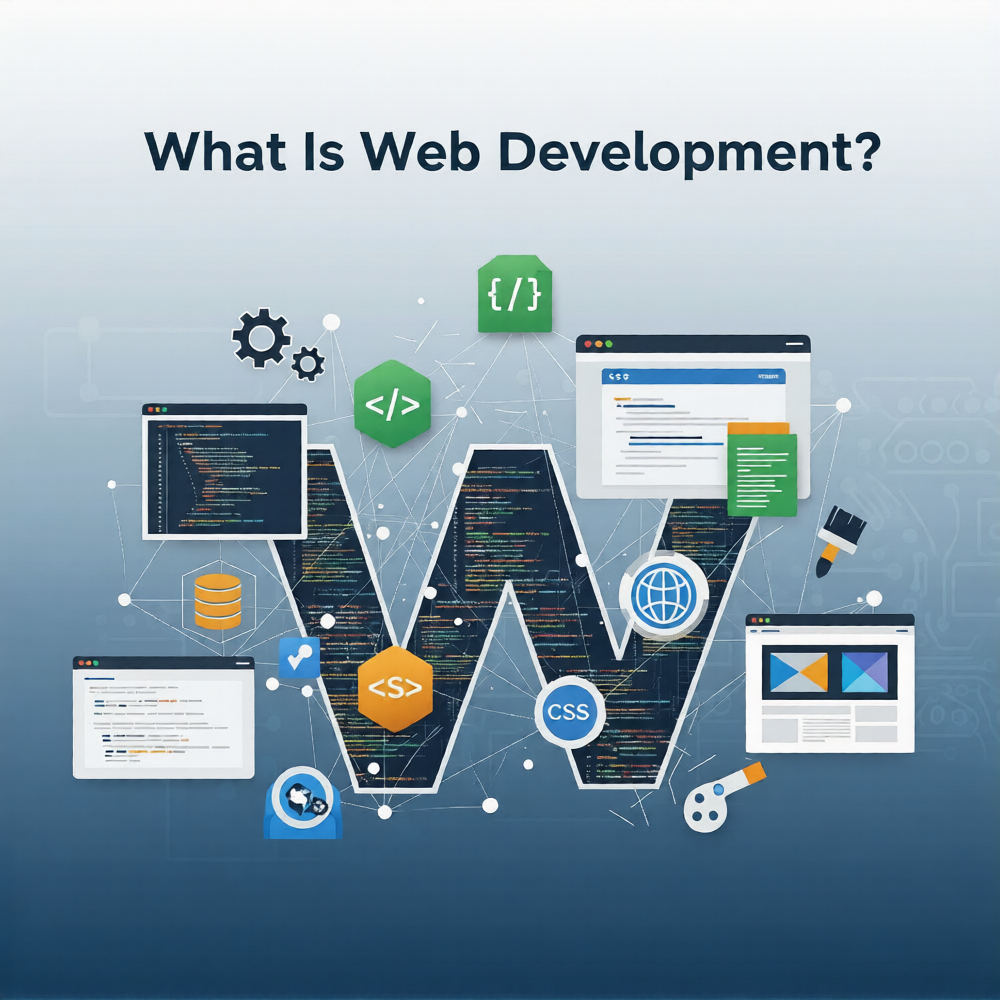
What Is Web Development? A Beginner-Friendly Explanation
The Technology Behind Every Website
Every day, millions of people visit websites like online stores, blogs, news portals, and educational platforms.
But have you ever wondered:
- Who builds these websites?
- How do they actually work?
- Can students learn this skill?
The answer lies in web development.
What is Web Development?
Web development is one of the most in-demand digital skills today. Students from commerce, arts, science, or engineering backgrounds are entering this field because it offers strong career opportunities and practical skills.
In this beginner-friendly guide, you will understand what web development is, how websites are built, and how students can start learning it step by step.
What Is Web Development?
Web development is the process of creating and maintaining websites and web applications that run on the internet.
It includes everything required to make a website work, such as:
- Designing the structure of web pages
- Writing code for functionality
- Connecting databases
- Making websites interactive
In simple words:
Web development is the technical work that turns an idea into a working website.
For example:
Imagine a restaurant website.
A web developer helps build:
- The homepage
- Online menu page
- Contact form
- Online order system
Without web development, websites cannot exist.
How Websites Actually Work (Simple Example)
To understand web development better, think about ordering food online.
Step 1: You open a website
Your browser loads a website page.
Step 2: Website content appears
Text, images, buttons, and menus appear.
Step 3: You interact with the site
You may fill a form or place an order.
Step 4: Data gets processed
The website processes your request and shows results.
All of this is created and managed by web developers using different technologies.
The Three Main Parts of Web Development
Web development is generally divided into three main areas.
1. Frontend Development (What Users See)
Frontend development focuses on the visual part of the website.
This includes:
- Layout of pages
- Colors and design
- Buttons and navigation
- Interactive elements
Technologies used include:
- HTML
- CSS
- JavaScript
Example:
When you open a shopping website and see product images and buttons, that is frontend development.
2. Backend Development (How the Website Works)
Backend development handles the logic behind the scenes.
It manages:
- User accounts
- Databases
- Server operations
- Login systems
Example:
When you log in to a website and see your personal dashboard, backend development is working.
3. Full Stack Development (Both Frontend + Backend)
A full stack developer works on both frontend and backend.
This means they can:
- Design the website interface
- Build server logic
- Manage databases
Full stack developers are highly valuable because they understand the entire system.
Key Technologies Used in Web Development
Here are some fundamental technologies developers learn.
| Technology | Purpose |
|---|---|
| HTML | Structure of WebPages |
| CSS | Design and Layout |
| JavaScript | Interactive Features |
| Databases | StoreWebsite Data |
| Backend Languages | Process Users Request |
These technologies work together to build modern websites.
Why Web Development Is a Popular Career Choice
Web development is becoming one of the most attractive career paths for students.
1. High Demand
Businesses of all sizes need websites.
From startups to large companies, web developers are always required.
2. Skill-Based Career
Unlike many professions, web development focuses on skills rather than degrees.
Students from:
- BA
- B.Com
- BSc
- BCA
- Engineering
can all build careers in this field.
3. Multiple Career Options
Web development offers various career opportunities such as:
- Frontend Developer
- Backend Developer
- Full Stack Developer
- Freelance Web Developer
- Website Consultant
4. Remote Work Opportunities
Many developers work remotely for international companies or clients.
This flexibility makes the career attractive.
Why Students Should Learn Web Development Early
Starting early provides several advantages.
Students who begin learning during school or college often gain:
- Practical technical skills
- Internship opportunities
- Strong portfolios before graduation
For example:
A student who starts learning in first year of college may graduate with:
- 5–10 real projects
- Freelancing experience
- Industry-ready skills
This creates a strong advantage in the job market.
Step-by-Step Path to Start Web Development
If you are a beginner, here is a simple roadmap.
Step 1: Understand Website Basics
Learn how the internet and websites work.
Step 2: Learn HTML
HTML helps create the structure of web pages.
Step 3: Learn CSS
CSS makes websites visually attractive.
Step 4: Learn JavaScript
JavaScript adds interaction and dynamic features.
Step 5: Build Small Projects
Examples include:
- Personal portfolio website
- Blog layout
- Business landing page
Projects are essential for learning.
Step 6: Learn Backend Development
Understanding backend technologies helps you build complete web applications.
Step 7: Create a Developer Portfolio
A portfolio shows your skills and projects to employers or clients.
Common Myths About Web Development
Many beginners hesitate due to misconceptions.
Myth 1: You Must Be Good at Mathematics
Web development focuses more on logic and creativity than complex math.
Myth 2: Only Engineering Students Can Learn It
Students from any academic background can learn web development.
Myth 3: Coding Is Extremely Difficult
Like any skill, coding becomes easier with practice and guidance.
How the SiteGenius Program Helps Beginners Learn Web Development
Many students struggle because they follow random tutorials online.
The SiteGenius Web Development Training Program provides a structured learning path designed specifically for beginners.
The program focuses on:
- Step-by-step web development training
- Real-world project experience
- Practical coding skills
- Portfolio building guidance
- Career-focused learning
If you want to explore further:
- Visit the Curriculum Page to see complete roadmap
- Check the Admission Page for upcoming batches
- Attend the Free Awareness Session
Students learn how to move from basic concepts to building complete websites.
FAQs: Web Development for Beginners
1. What exactly does a web developer do?
A web developer designs and builds websites using programming languages and web technologies.
2. Can beginners learn web development easily?
Yes. With proper guidance and regular practice, beginners can learn web development step by step.
3. Do I need an engineering degree for web development?
No. Students from arts, commerce, or science backgrounds can also become web developers.
4. How long does it take to learn web development?
Basic web development skills can be learned in a few months, while becoming a professional developer may take around 1–2 years of practice.
5. Is web development a good career in India?
Yes. With the rapid growth of digital businesses and startups, web developers are in high demand across India.
Conclusion: The Beginning of a Powerful Skill
Web development is more than just coding.
It is the skill that powers the internet.
For students today, it offers:
- Career opportunities
- Freelancing options
- Creative problem-solving
- Long-term growth
The best part is that any motivated student can start learning it.
If you want to move beyond theory and start building real websites, exploring a structured program like SiteGenius Web Development Training can be a strong first step.
Your journey into the world of web development begins with curiosity, practice, and the willingness to learn.
And every professional developer once started exactly where you are now – as a beginner.